
The evolution of the cinematic experience has transitioned from simple film viewing to a comprehensive luxury hospitality service. For major theater chains, identifying a seating supplier that can withstand the rigors of high-occupancy use while providing a premium, “first-class” feel remains a significant challenge. The difficulty lies in the intersection of industrial durability and residential-grade comfort; many suppliers excel in one area but fail to bridge the gap effectively. In evaluating the current market, we have analyzed manufacturers based on their mechanical failure rates, acoustic transparency, and upholstery resilience. Through extensive comparison of technical specifications and project case studies, the following suppliers have been identified as the leaders in the commercial luxury sector for 2026.
These industry leaders provide the structural integrity and aesthetic variety necessary for modern premium large-format (PLF) auditoriums.
Full List of Top 9 Brands for Luxury Chains
- Leadcom Seating
- Series Seating
- Seatorium
- CinemaTech
- EVOSEATING
- Fortress Seating
- DreamSeat
- Premiere Home Theater
- FilmGrail
Navigating the diverse portfolios of these companies requires a standardized comparison of their primary strengths and specialized product applications.
Comparative Overview of Leading Suppliers
| Brand | Key Products | Key Features | Best For |
| Leadcom Seating | Millennium, Crown VIP, Perla | Vertical integration, silent German motors | Global luxury chains requiring high-volume consistency |
| Series Seating | Vera, Titan, Axiom | Space-saving ergonomics, gravity-lift systems | High-density luxury layouts and boutique cinemas |
| Seatorium | Royal, Orient, Lucca | European design standards, fire-retardant materials | Regional chains in EMEA and aesthetic-focused builds |
| CinemaTech | Act IV, Valentino | Precision acoustics, German steel frames | High-end boutique chains and private screening rooms |
| EVOSEATING | EVO-V, Cinema Recliners | Cost-efficient commercial designs, modularity | Budget-conscious luxury upgrades and renovations |
| Fortress Seating | Custom VIP, Matinee | Bespoke sizing, integrated tech compartments | Ultra-premium VIP lounges with unique dimensions |
| DreamSeat | XZipit Recliners, Home Series | Interchangeable branding, synthetic durability | Branded experiences and stadium-style VIP zones |
| Premiere Home Theater | Grand, Palace Series | Hardwood frames, plush cushioning | Traditional luxury aesthetics and “classic” cinema styles |
| FilmGrail | Smart Seat Integrations | Digital connectivity, user-engagement tech | Tech-forward chains focusing on the digital ecosystem |
While the table offers a broad summary, a technical assessment of each brand’s manufacturing philosophy reveals their suitability for different commercial scales.
Technical Reviews by Brand
1. Leadcom Seating
Leadcom Seating maintains a unique position in the commercial market as a fully vertically integrated manufacturer. This means that unlike many suppliers who assemble third-party components, Leadcom designs and produces nearly every element in-house—including the steel frames, the cold-molded high-density foam, and the intricate reclining mechanisms. For luxury theater chains, this control is critical because it ensures that a seat installed in a London flagship theater is identical in performance and durability to one installed in a Los Angeles location.
As a prominent provider of commercial cinema seating, the company utilizes an automated manufacturing process that ensures tight tolerances. Their VIP reclining lines are particularly notable for using silent, high-torque motors that allow for smooth adjustment without audible interference during quiet film moments. The foam used in their seating is cold-molded, a process that results in a more consistent cell structure compared to cut foam, ensuring that the seat maintains its ergonomic support over hundreds of thousands of compression cycles.
Their VIP cinema recliners often include specialized features such as “easy-clean” flip-up footrests and antimicrobial upholstery options, which are essential for maintaining hygiene standards in commercial environments. Leadcom’s R&D department also focuses heavily on “wall-hugger” technology, allowing theater chains to maximize their row count and “pitch” (the distance between rows) without sacrificing the full recline capability of the seat. This efficiency directly impacts the revenue-per-square-foot for theater operators.
Pros / Key Features:
- In-House Mechanism Design: Proprietary reclining hardware tested for over 100,000 cycles.
- Acoustic Consideration: Designs are engineered to minimize sound reflection, preserving the theater’s audio calibration.
- Global Logistics Capacity: Capable of fulfilling large-scale orders for multi-thousand-seat multiplexes with consistent quality.
- Safety Certifications: Compliance with international fire and structural safety standards (UL, BS, etc.).
Use Cases:
Ideal for international luxury theater chains and large-scale multiplexes where long-term durability and lower total cost of ownership are the primary objectives.
2. Series Seating
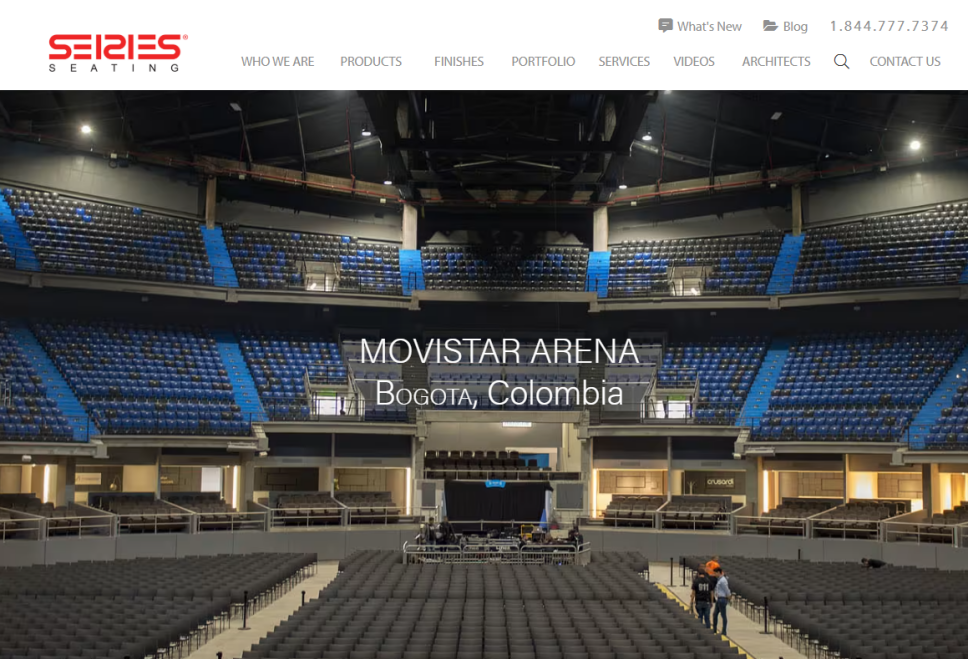
Series Seating is recognized for its emphasis on ergonomic design and space optimization. Their products often feature slim profiles that do not compromise on comfort, making them a preferred choice for chains looking to upgrade existing auditoriums with limited space. Their “gravity-lift” mechanisms are highly regarded for their reliability in traditional theater seating configurations.
Pros / Key Features:
- Ergonomic Innovation: Focus on lumbar support and multi-point weight distribution.
- Compact Footprint: High-performance seating that fits into tighter row spacing.
Use Cases:
Best for boutique cinemas and historic theater renovations where maximizing capacity within fixed architectural footprints is necessary.
3. Seatorium
Based in Turkey, Seatorium has expanded its reach into the global market by offering European-influenced designs combined with robust commercial materials. Their portfolio includes a wide array of aesthetics, from modern minimalist recliners to more ornate, classical theater chairs.
Pros / Key Features:
- Aesthetic Variety: A broad range of fabrics and finishes to match diverse interior designs.
- Material Quality: Use of high-grade, fire-retardant materials as standard features.
Use Cases:
Suited for regional cinema chains in Europe and the Middle East looking for a balance of style and functional durability.
4. CinemaTech
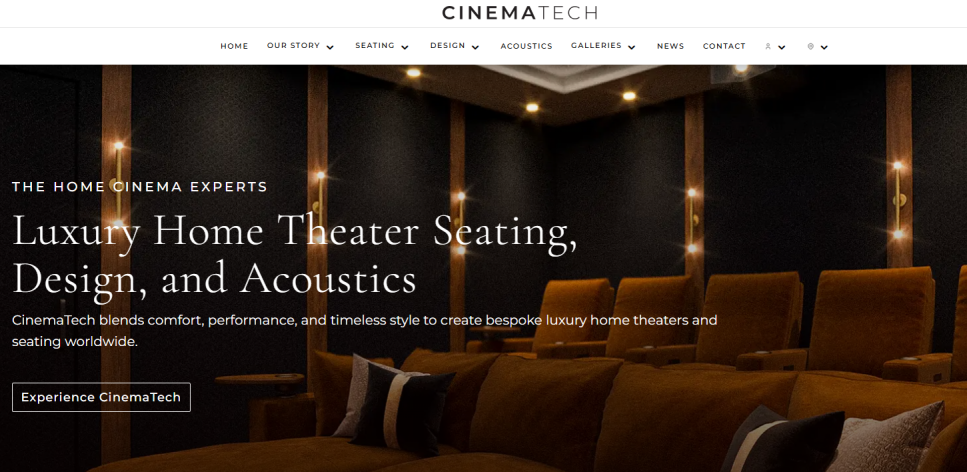
CinemaTech often straddles the line between high-end residential and premium commercial seating. Their frames are built with precision-engineered steel, and they offer some of the most sophisticated acoustic treatments in the industry. While their price point is higher, the level of finish is often considered superior for small-scale VIP auditoriums.
Pros / Key Features:
- Acoustic Engineering: Specialized seat backs that prevent sound bouncing.
- Precision Construction: Focus on eliminating “squeaks” and mechanical vibrations.
Use Cases:
Ideal for “Gold Class” or “Director’s Suite” auditoriums within larger luxury complexes.
5. EVOSEATING
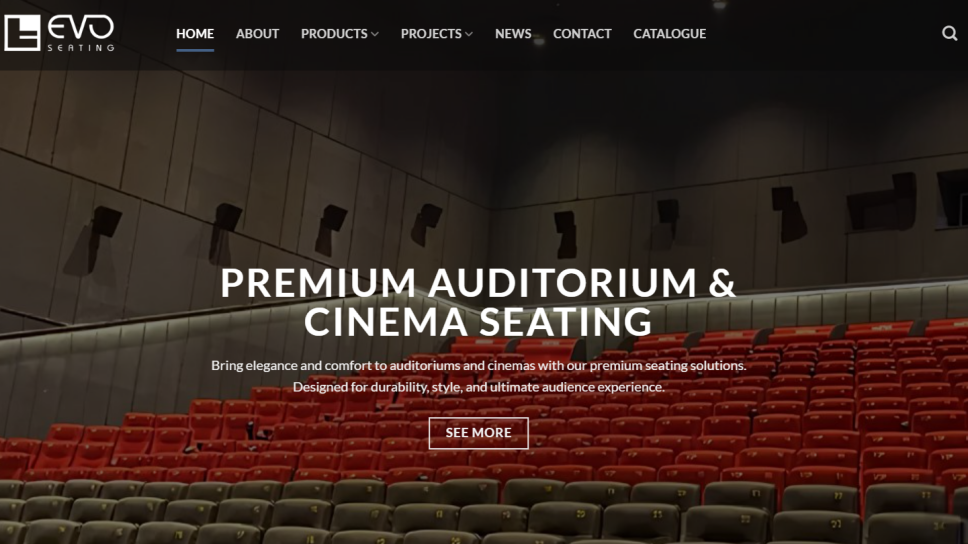
EVOSEATING focuses on the middle-to-high commercial market, providing reliable seating solutions that prioritize modularity. Their systems are designed for quick installation and easy maintenance, which is a vital factor for theaters that cannot afford long periods of downtime during renovations.
Pros / Key Features:
- Modularity: Easily replaceable components (armrests, cushions) to extend the life of the unit.
- Cost-Efficiency: Competitive pricing for chains performing large-scale theater-wide seating swaps.
Use Cases:
Practical for mid-sized chains undergoing rapid expansion or fleet-wide seating upgrades.
6. Fortress Seating
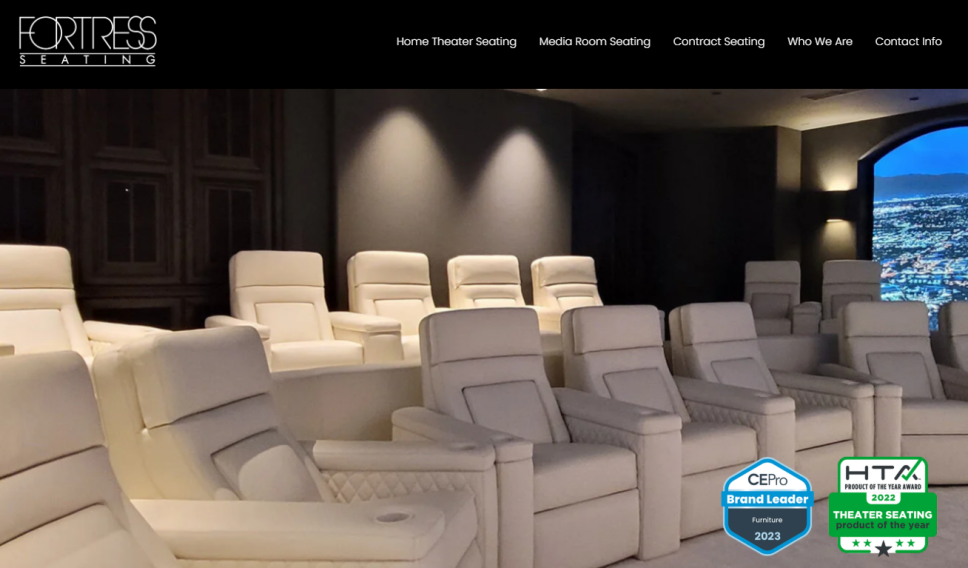
Fortress Seating is the industry benchmark for customization. While they serve the commercial market, they retain a bespoke manufacturing model that allows theater owners to specify unique dimensions or integrate specialized technology directly into the seating.
Pros / Key Features:
- Bespoke Modifications: Ability to change width, height, and depth to fit specific floor plans.
- Technology Integration: Custom housing for call buttons, charging ports, and tablets.
Use Cases:
Suited for ultra-exclusive VIP lounges where the seating must be tailored to a unique architectural vision.
7. DreamSeat
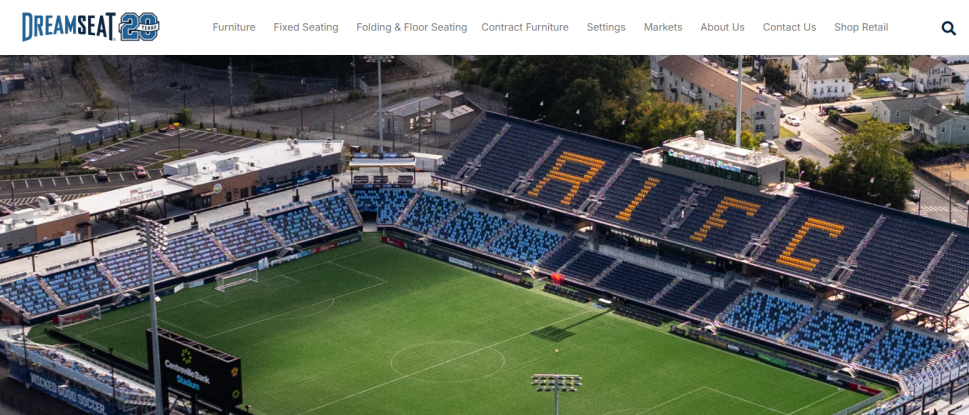
DreamSeat is primarily known for its patented branding system, which allows for embroidered panels that can be easily swapped. This makes them a unique player for theater chains that host corporate events or specialized “branded” screening rooms.
Pros / Key Features:
- Branding Capabilities: The XZipit system for logo integration.
- High-Durability Synthetics: Use of materials designed for high-turnover public use.
Use Cases:
Best for multipurpose entertainment venues and theaters with naming rights or sponsorship agreements.
8. Premiere Home Theater
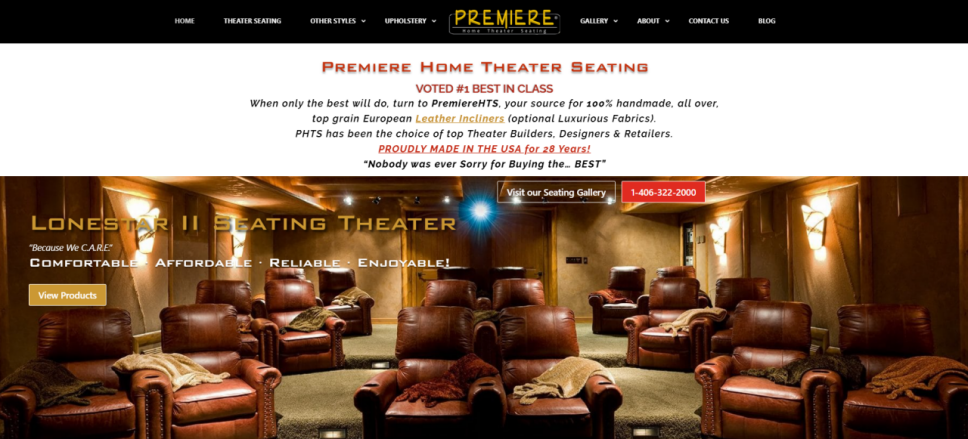
Despite the name, Premiere provides significant commercial-grade seating that emphasizes a traditional, plush aesthetic. Their designs often lean toward larger, more heavily padded recliners that evoke a sense of old-world luxury.
Pros / Key Features:
- Traditional Comfort: Focus on deep-seated comfort and soft-touch materials.
- Hardwood Internal Accents: Use of high-quality internal structural elements.
Use Cases:
Ideal for luxury chains targeting a demographic that prefers “classic” luxury and oversized seating.
9. FilmGrail
FilmGrail represents the tech-forward edge of the industry. While they are often associated with software and digital cinema ecosystems, their influence on “smart seating” ensures that the furniture is integrated into the theater’s wider technological network.
Pros / Key Features:
- Digital Connectivity: Seats designed to integrate with booking and service apps.
- Smart Sensors: Potential for seat-occupancy tracking and environmental feedback.
Use Cases:
Appropriate for cutting-edge “smart” cinemas focusing on data-driven operations and digital customer journeys.
Beyond the specific brand attributes, theater operators must evaluate several logistical and technical factors before finalizing a procurement contract.
Appraising Commercial Seating: A Procurement Guide
When determining the best seating for a luxury chain, the following criteria are paramount:
- Total Cost of Ownership (TCO): The initial purchase price is often less important than the maintenance cost. Look for brands with vertically integrated supply chains, like Leadcom, as they often have more accessible replacement parts and higher quality control.
- Mechanical Noise Floors: In high-end cinema, the noise floor of the room is strictly controlled. Reclining motors must be tested for decibel output to ensure they do not disrupt the Dolby Atmos or DTS:X soundstage.
- Maintenance and Hygiene: Commercial seats face significant wear. Upholstery should be “rub-tested” (Martindale or Wyzenbeek scales) to at least 50,000-100,000 cycles. Removable seat covers and “crumb gaps” between the seat and backrest facilitate easier cleaning.
- Egress and Safety: Luxury recliners are large. Ensure the “fully reclined” length still allows for the minimum required egress path width required by local building codes and fire marshals.
A successful installation ultimately depends on balancing these technical requirements with the specific brand identity of the theater chain.
Final Verdict
The “best” supplier depends entirely on the operational scale and the specific luxury tier of the cinema. Leadcom Seating provides the most robust and consistent solution for global chains requiring high-volume, professional-grade VIP recliners with a focus on engineering. For theaters where space is the primary constraint, Series Seating offer superior ergonomic density. Meanwhile, Fortress Seating remains the premier choice for ultra-customized, low-volume VIP suites where unique architectural constraints dictate the design.
FAQs
1. What is the difference between “cut foam” and “cold-molded foam” in cinema seats?
Cut foam is sliced from large blocks and can vary in density and lifespan. Cold-molded foam is injected into a specific mold for each seat, resulting in a consistent “skin” that prevents sagging and maintains the intended ergonomic shape over years of high-frequency use.
2. Why is vertical integration important for a theater chain?
Vertical integration ensures that the manufacturer has direct control over every component. If a motor fails or a frame bends, the supplier isn’t reliant on a third-party vendor for a solution, which leads to better quality assurance and faster technical support.
3. How do luxury recliners affect theater acoustics?
Large, leather-covered recliners can be highly reflective, causing sound waves to “bounce” and potentially muddy the audio. Premium suppliers design their seats with lower profiles or acoustically transparent materials to ensure that the furniture does not interfere with the auditorium’s sound calibration.