
Choosing dental equipment for a new clinic or treatment-room upgrade is rarely a matter of finding the product with the longest specification sheet. A top-rated setup must fit the procedures performed, the way clinicians work, and the level of integration expected in the treatment room. For B2B buyers, the comparison also needs to cover supporting equipment and supplier capability.
The current Roson product portfolio provides a useful example of why configuration matters. Its range includes dental chairs and units, compressors, stools, lights, handpieces, autoclaves, intraoral cameras, curing lights, ultrasonic scalers, X-ray equipment, suction units, cabinets, and other equipment.
What Should a Dental Clinic Equipment Comparison Actually Measure?
A useful comparison starts with the treatment workflow rather than the equipment category. The dental chair is the central platform because several clinical functions are positioned around it, including lighting, instrument delivery, water supply, suction, controls, and operator seating.
For a dental equipment supplier, this means product comparison should look at how individual components work together. A chair that provides multiple adjustment options may be more appropriate for one treatment environment, while a more integrated unit may better suit a clinic seeking built-in instruments and centralized controls.
The meaning of “top-rated” therefore changes according to the buyer. A distributor may prioritize configuration flexibility and product breadth, while a clinic operator may focus more heavily on usability, treatment-room organization, and the equipment required for routine procedures.
How the Main Dental Unit Lineup Differs
The dental-unit range demonstrates why comparing models only by appearance or price can be misleading. The Classic N1 is positioned as a more straightforward configuration, while models such as the S3 introduce a broader combination of treatment-room functions. The S3, for example, includes an integrated instrument tray, LED dental lamp, water-heating system, water-storage supply, three-way syringe, suction, and foot control.
Higher-level configurations introduce additional integration. The A1 PRO includes a medical-grade HD touchscreen, programmable memory positions, intelligent controls, and options for built-in treatment instruments such as a scaler, micromotor, curing light, and intraoral camera.
The S6 provides another point of comparison, with listed equipment including an ultrasonic scaler and curing light alongside its treatment-unit systems. The A3S takes a different route by incorporating smart functions such as a self-check system, intelligent rinse function, memory seat, and error-code display.
Consequently, buyers searching for dental clinic equipment for sale should compare models according to the functions actually required rather than assuming that the newest or most feature-rich unit is automatically the best choice.
Which Supporting Equipment Completes the Treatment Room?
A treatment unit does not operate in isolation. The surrounding equipment determines whether a clinic can establish a complete working environment without sourcing every component separately.
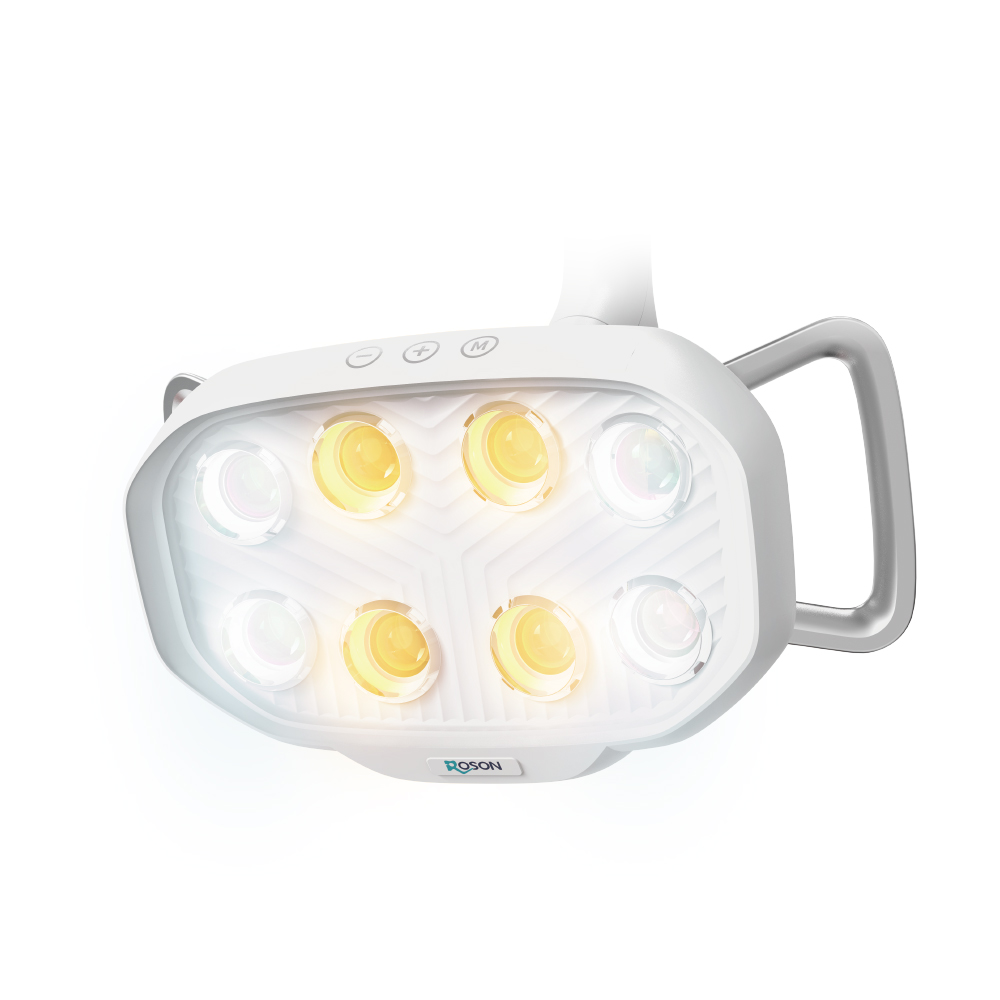
The product range includes dental air compressors, dental stools, dental lights, handpieces, autoclaves, intraoral cameras, LED curing lights, ultrasonic scalers, dental X-ray equipment, suction units, and dental cabinets. This broader portfolio gives buyers more room to build equipment packages around a particular clinic configuration.
For example, the compressor addresses the compressed-air side of the treatment environment, while suction equipment supports fluid and debris management. An autoclave belongs to infection-control operations rather than chairside treatment itself, yet it remains part of the equipment infrastructure required by a functioning dental clinic.
That distinction matters for a dental equipment supplier comparison. A supplier offering several connected categories can potentially simplify sourcing for distributors, contractors, and clinics undertaking a larger installation.
When a Higher-Specification Configuration Makes Sense
Advanced equipment becomes easier to justify when its additional functions correspond to a real workflow requirement.
A clinic that routinely uses integrated scaling, curing, motor-driven treatment, or digital imaging may benefit from a unit designed to accommodate those functions. Conversely, purchasing a highly integrated configuration without using its additional capabilities can create unnecessary complexity.
Customization can also change the comparison. The portfolio includes customized dental-unit models, including customized A3L, KLT-6210, and KLT-6220 configurations. This is particularly relevant for B2B projects where room layouts, market requirements, or distributor specifications may differ from a standard catalog configuration.
The better question is therefore not whether an advanced model has more functions. It is whether those functions reduce equipment gaps, simplify the intended workflow, or satisfy requirements that would otherwise require additional standalone devices.
What Separates a Complete Equipment Package From a Product Purchase?
A product purchase ends when the equipment is delivered. A clinic-equipment project does not. Installation, operation, maintenance, troubleshooting, training, and technical communication can all affect how effectively equipment is put into service.
Roson states that its support system covers installation, operation, maintenance, and after-sales guidance, with technical resources including manuals, installation guides, maintenance videos, and troubleshooting materials. Its site also describes pre-sales consultation covering product details, logistics, import tariffs, and shipping schedules, together with post-sales support and engineer assistance.
For buyers comparing dental clinic equipment for sale, these services are part of the commercial evaluation because equipment selection may involve multiple models, accessories, shipping requirements, and local installation conditions.
A supplier’s manufacturing capability can also matter for larger orders. The reference site describes digital production management, quality traceability, an integrated supply chain, and production of more than 1,000 dental units monthly. Such information is more relevant to distributors and project buyers than a simple product ranking because it addresses whether the supplier can support repeat or multi-unit procurement.
The strongest comparison is not a universal ranking, but a matching exercise between a clinic’s workflow and its dental equipment supplier configuration. Basic units fit straightforward treatment environments, while integrated models suit practices seeking broader functionality, with supporting products rounding out the room.
For B2B buyers, the final decision should combine the capabilities of your chosen dental equipment supplier, product configurations, customization, and service resources. This holistic view redefines “top-rated” in practical terms: equipment tailored to your clinical operations and backed by reliable support from purchase through installation and ongoing use.