
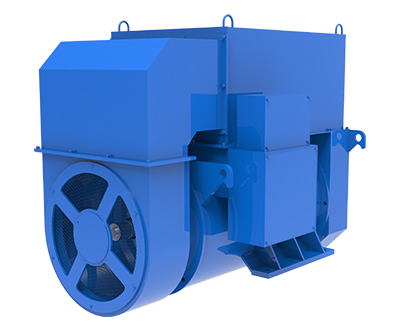
Standard and high output alternators can share capacity ratings while differing in dimensions and excitation response. A high output design becomes useful when more electrical capacity must fit a restricted envelope, or demanding loads exceed the standard machine’s demonstrated capability. The difference lies in electromagnetic loading, cooling and excitation, rather than the label alone.
An OEM alternator comparison therefore starts with the same voltage, frequency, duty and ambient conditions. Otherwise, a larger rating can conceal a different operating basis. The engineering question is whether additional capability solves an actual constraint without creating unnecessary installation or operating costs.
Power Density Requires More Than a Larger Rating
Power density describes output relative to machine size. A higher rating in a proportionally larger frame increases capacity without necessarily improving density. Conversely, delivering more output within limited space places greater demands on the electromagnetic design and the path carrying heat away from the windings.
Winding design influences losses and temperature. Ventilation determines how effectively that heat leaves the machine. A compact high output arrangement must coordinate both: additional electrical loading offers little practical benefit if restricted airflow forces the installation to operate below the intended rating. Electromagnetic design also influences waveform quality. Winding pitch and damping can reduce distortion, whereas excitation governs voltage regulation. Higher continuous output and cleaner voltage therefore describe different performance attributes.
Standard designs can remain preferable where adequate space already exists and their electrical performance meets the duty. For an OEM alternator supplier, the meaningful comparison is usable output under the specified conditions, together with the dimensions and cooling clearances needed to sustain it.
Motor Starting Tests Excitation and Thermal Margin
A large motor presents a brief electrical demand that differs from its normal running load. Starting current can depress terminal voltage, while the excitation system responds to restore it. A standard machine may handle the event satisfactorily; a more demanding start can justify stronger excitation capability and an electromagnetic design suited to sudden reactive demand.
A custom high output alternator can target that mismatch instead of merely increasing continuous capacity. The useful advantage is a voltage dip and recovery compatible with the connected equipment. A larger nameplate alone does not establish faster recovery, and the prime mover must also accept the changing mechanical load.
Transient response and overload endurance remain separate comparisons. Starting capability concerns an event; overload capability also depends on current magnitude, duration and temperature. Extra thermal margin may accommodate a specified short overload, but sustained operation beyond the rating can overheat either design. Comparative testing needs the same starting sequence and acceptance limits.
Compact Construction and IP55 Solve Different Problems
EvoTec Power offers customization around power, voltage and frequency requirements. Its published customized alternator range uses a shorter, thicker body intended to support ventilation and heat dissipation while reducing installation space, materials and enclosure costs. That combination addresses packaging and thermal design together, rather than treating compactness as an isolated benefit.
The company’s separate TCU428F product page specifies IP55 protection. That designation describes enclosure protection, not higher power density, faster voltage recovery or an overload allowance. Environmental protection belongs beside the electrical comparison: a demanding location can require protection features whether the selected output level is standard or customized.
The manufacturer’s research material also describes winding optimization, an integrated AC exciter and automatic voltage regulation. Those are relevant engineering functions, but their presence does not make every configuration interchangeable. The proposed machine needs a coherent combination of winding, excitation, protection and cooling appropriate to its actual installation.
Space Savings Must Earn Their Investment
A shorter alternator may reduce the required canopy length or simplify a constrained equipment layout. Those benefits matter where the enclosure or plant room sets the project boundary. Adequate airflow, coupling access and maintenance space still occupy room, so machine dimensions cannot represent the complete installed footprint.
The financial comparison starts with the quoted purchase and integration costs of a custom high output alternator. Potential offsets include enclosure materials, installation work and the value of meeting a demanding operating sequence. Lower electrical losses can reduce the mechanical energy required for the same output; whole generator fuel consumption also depends on the engine and its operating load.
Quotes for the enclosure and installation establish capital differences. Efficiency data at the expected load inform running costs, while the actual duty schedule establishes operating hours. Any assumed savings require separate justification.
Return on investment requires those costs and benefits over the expected operating period. Neither compactness nor additional capacity guarantees savings. A standard machine can offer the better return when it already satisfies the load; customization earns its premium where a measurable constraint otherwise raises project cost or limits operation.
Match the Investment to the Electrical Duty
The final decision connects load response, continuous output and installed space with their financial consequences. EvoTec Power can supply the electrical component within that comparison; complete generator performance also requires coordinated engine, controls and cooling. A standard design deserves selection when it meets the defined duty. A higher output alternative deserves it when the additional capability resolves a documented project need.